
27th June 2026
tl;dr
The US leads the way, CBDC-wise. The Hall of Shame is readily accessible. The four-year cycle is approaching an inflection point.
Market Snap
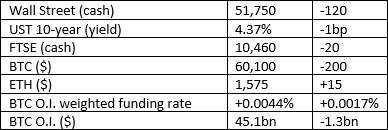
Market Wrap
The situation in the Middle East remains as precarious as ever though markets are not overly concerned but I note that in South Korea circuit-breakers were enforced after an 8% fall in the KOSPI.
Curious Cryptos’ Commentary – The US
Heading out of the Senate for House approval by an overwhelming 85-5 vote is a piece of housing legislation which, for reasons that escape me, also includes some crypto elements.
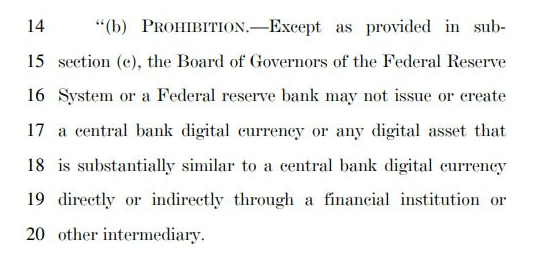
Specifically, the bill explicitly allows for permissionless dollar stablecoins, though we know this already because of the GENIUS Act. More importantly, the Fed is prohibited from doing any research into a US CBDC, or even launching one, until 2030 at the earliest. That date really should be 2130 or later but, nonetheless, the descriptor “land of the free” has never felt more apt:
https://www.banking.senate.gov/imo/media/doc/bill_text_of_the_21st_century_road_to_housing_act.pdf
Curious Cryptos’ Commentary – The bad guys
This is a great website that tracks the adoption of CBDCs worldwide:
https://www.atlanticcouncil.org/cbdctracker/
Currently in the Hall of Shame are three countries that have launched CBDCs, the tyrant’s tool of choice to exert control and coercion over citizens: Nigeria, Bahamas, and Jamaica.
A frightening forty-one countries are piloting CBDCs. Many of the usual suspects are in that number including China, Russia, Iran, Saudi Arabia, Kazakhstan, and Canada, all of whom have questionable records when it comes to respecting human rights, liberty, and freedom. It is shocking to find luminaries such as Australia going down this path.
It is heartening to see that North Korea has halted work on its own CBDC. Maybe Kim Jong-un isn’t all bad after all.
The authors of this website are, remarkably, in favour of CBDCs as witnessed by this claim:
“There are many reasons to explore digital currencies, and the motivation of different countries for issuing CBDCs depends on their economic situation. Some common motivations are: promoting financial inclusion by providing easy and safer access to money for unbanked and underbanked populations; introducing competition and resilience in the domestic payments market, which might need incentives to provide cheaper and better access to money; increasing efficiency in payments and lowering transaction costs; creating programmable money and improving transparency in money flows; and providing for the seamless and easy flow of monetary and fiscal policy.”
Every single one of those benefits is provided more efficiently and effectively by public, permissionless blockchains without all the attendant downsides of giving up control of your own money to bureaucrats employed by the state.
Curious Cryptos’ Commentary – The four-year cycle
My conviction that the four-year cycle was dead has clearly been tested to destruction. I admit I got that one wrong. Here is a cheering update in case 2026’s price action is weighing on your crypto conviction:
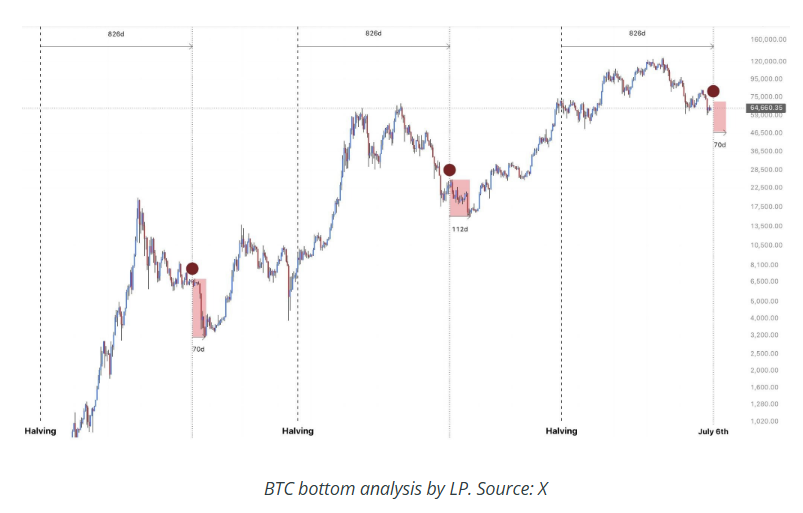
Note the log scale.