
tl;dr
Russia has invented an autonomous hacking agent which requires no human intervention. The stablecoin revolution has just taken a major step forward.
Market Snap
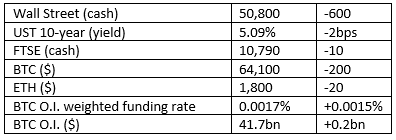
Market Wrap
The Anthropic IPO pricing today to start trading tomorrow will be an interesting test of the resilience, or otherwise, of AI stocks. This might be the start of a major sell-off, or a major rally. BTC will play along too.
Occasional Series – Voyager 1
This remarkable spacecraft, launched in September 1977, is still transmitting information to us about magnetic fields and plasma waves from the outer reaches of what we know as the solar system. Today Voyager 1 reaches an extraordinary milestone – it will be over one light day away from us.

Curious Cryptos’ Commentary – Be afraid, be very afraid
Google has announced that it has found a self-running AI hacking tool:
“(Google) … identified an exposed staging server hosting a multi-agent vulnerability research and weaponization framework, dubbed ‘exploit_agent’, that integrates with multiple frontier and local LLMs. The framework is set up to conduct continuous differential analysis of popular web application software. It compares code before and after patch announcements, analyzes findings to identify potential vulnerabilities, drafts exploits, and automatically executes them without human intervention”.
It was only a matter of time, I guess.
A failure to keep software applications up to date is a major source of problems related to malicious actors. The industrialisation of the ability to exploit code weaknesses as soon as patches are released, without human intervention, is a significant ramp-up in the arsenal of these feral scumbags. This isn’t a problem just for cryptos, of course. The risk to TradFi is far greater. However, it is a timely reminder that unless you are fortunate enough to live in a country that allows access to spot-crypto ETFs, your personal security protocols involving cold wallets, and the correct usage of hot wallets, remain paramount.
You won’t be surprised to hear that comments within the code are in Russian:
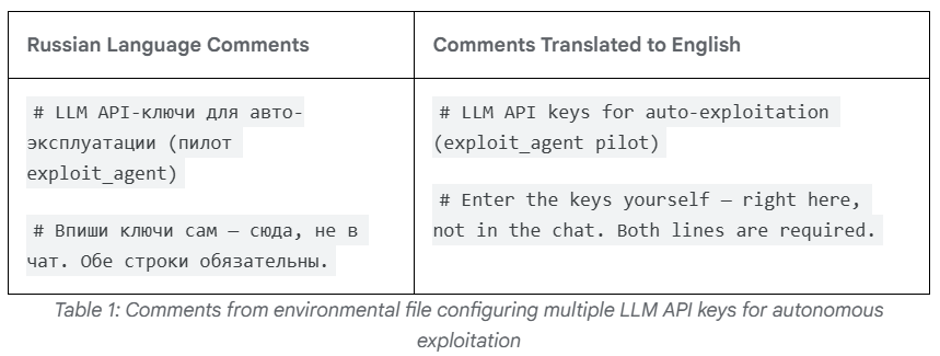
Presumably Putin’s personal stocks of Strottarga Bianco caviar ($113k per kilo) and his collection of 2017 Champagne Avenue Foch magnums (one sold for $2.5mm in a private sale) are running low.
…
The only saving grace is that, for reasons that remain unclear, this agentic hacking tool is aimed primarily at French websites. For now, at least.
Curious Cryptos’ Commentary – The stablecoin revolution
Building on the BLOOM initiative (Borderless, Liquid, Open, Online, Multi-currency), DBS in partnership with Circle have announced that eligible institutional clients can directly mint and redeem USDC through DBS. This move is driven entirely by client needs. Evy Theunis, Head of Digital Assets, Institutional Banking Group, DBS, explains:
“Institutions are increasingly looking to tokenised money to manage liquidity more efficiently and support their growth across new markets … We believe the future of financial services will be multi-modal and multi-instrumental, with different forms of tokenised money serving different needs … we are providing institutions greater choice in how they move and manage value, based on what best serves their needs”.
BLOOM involves not just stablecoin issuers like Circle, and not just TradFi banks like DBS, but also the central banks of Malaysia and Thailand. Singapore’s central bank has a leading role. All the participants in BLOOM understand and accept that public, permissionless blockchains are superior in so many ways to private, permissioned blockchains, and are especially superior to that tool of oppression and control, CBDCs (Central Bank Digital Currencies).
Eligible institutions will now be able to settle US dollar flows almost instantaneously, at virtually zero cost, 24/7, dramatically improving their ability to manage liquidity and other treasury functions. Once this project is successful, and the benefits are recognised elsewhere, the clamour for equivalent tools from all other TradFi banks and financial institutions will become deafening.
Why does this matter?
Two things spring to mind.
Those autonomous AI hacking agents are at their most effective when interacting with centralised systems. That’s not to say that the decentralised world is entirely immune. Apart from BTC and ETH, all crypto solutions have a degree of centralisation which the agent can attack. For example, bridges have long been a specific weak point. But you cannot successfully hack the Bitcoin blockchain, nor the Ethereum blockchain, unless the miners or validators accept it. Which they won’t, for obvious reasons. I suspect the value of that truth has not yet been widely recognised.
The second point is simply that here in CC Towers, we bang on about the stablecoin and tokenisation revolutions probably more than is good for ourselves. Or our loved ones.
But we want you to remember this: all cross-border settlements, and all institutional settlements of any nature will soon be in tokenised form. All asset classes will be tokenised. The democratisation of the financial system is underway, enabled by cryptos and blockchain technology.
Gosh, we are lucky to live in such exciting times.