
tl;dr
MSTR buys back the BTC it recently sold but at a higher price. BMNR adds to its ETH stash though the buying will end soon. A burner wallet is also accumulating BTC at an alarming rate.
Market Snap
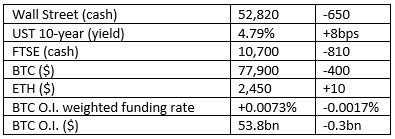
Market Wrap
Global bond yields are heading higher across the board. With no appetite from any government for reducing public spending and increasing demands in the form of defence needs and the costs associated with an ageing population, deficits will continue to grow, adding to the debt pile. In the UK we spend over £100bn each year in interest payments. In the US, it is over $1 TRILLION.
This is simply unsustainable. Something must give, starting with a massive devaluation of fiat against hard assets, though I suspect it won’t stop there.
Curious Cryptos’ Commentary – Strategy (MSTR)
Yesterday, Michael Saylor, Chairman and founder of Strategy, announced the company’s first purchase of BTC for two months, for a total of 4,603 BTC at an average price of $80,300 each.
MSTR’s initial BTC acquisition plan was to issue shares when it was trading at a premium to the value of the BTC on balance sheet and to use the proceeds to buy BTC. This was a simple arbitrage trade, effectively buying BTC at a discount to the benefit of current shareholders. To reflect this, Michael invented the concept of BTC yield as a measure of the ever-increasing notional of BTC owned by shareholders.
This plan was expanded with the issue of high-coupon preference shares paying upwards of 10% pa or more to holders. Personally, I never understood how that trade could work over the long run unless BTC was on a permanent trajectory upwards. The 50% drawdown from BTC’s ATH at £126k last October demonstrates that was never going to be the case.
To relieve the pressure on the balance sheet inflicted by the preference shares, MSTR has recently sold some BTC and retired some of those preference shares. The company now claims to have zero leverage, which is undoubtedly a much healthier position.
Between May and August, MSTR sold 6,948 BTC at an average price of approximately $62k, which compares unfavourably with yesterday’s purchase.
That old buy high, sell low strategy is one that many speculative retail BTC investors are familiar with. It is not a long-term winning formula.
Curious Cryptos’ Commentary – Bitmine (BMNR)
BMNR announced it has purchased an additional 53,501 ETH for about $131mm, approximately $2,450 per coin. BMNR has been buying ETH for a little over a year now, with the stated objective of reaching a target of 5% of outstanding supply. Holding a total of 5,901,112 ETH valued at close to $15bn (nice!) that represents 4.9% of supply. BMNR’s acquisition spree is close to being finished.
86% of the ETH stash has been staked with an expected return of over $330mm every year in staking rewards issued as ETH. The company has not publicly disclosed what it does with those rewards though I note that like MSTR, it also issues preferred shares that carry a high coupon. Converting those staking rewards to fiat to pay the coupons on preferred shares seems a sensible way of avoiding some of the issues that MSTR recently experienced. There is no documentary evidence that BMNR has ever sold ETH.
Curious Cryptos’ Commentary – Kids, do not do this at home!
In what might be described as an anti-Strategy strategy, a weird thing happened earlier this year.
In April 2014, address 16g5hMoREWqMcaQGvnCHCWPheotD99bVQt received two tranches of BTC to a total of 20 BTC. With a price at the time of around $364, the cost of this BTC stash was just over $7k. At today’s prices it would be worth $1.55mm.
The coins were moved this year to what was likely to be a centralised cryptocurrency exchange, presumably with the objective of realising what would undoubtedly be a nice windfall, for both the investor and the ever-voracious taxman.
Soon afterwards, the same address received the same number of coins back minus a very small transaction fee of just a few dollars. It seems the owner had changed their mind. Then the coins moved once more, leaving this address virtually empty:
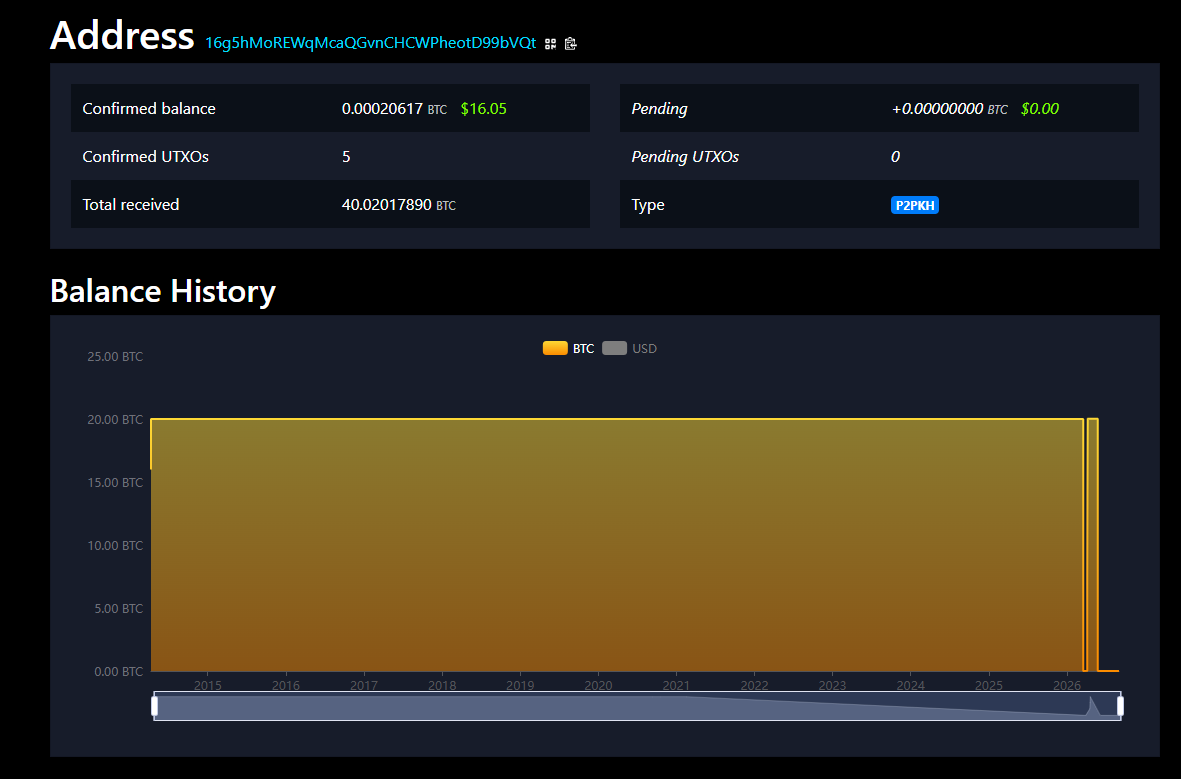
The odd thing is that the coins were sent to a known burner address, 1111111111111111111114oLvT2. This address has no known private keys. These 20 BTC can never be spent again.
It is unlikely we ever find out why this happened, though I think we can rule out a fat-finger mistake. What is even more intriguing is that this known burner address now holds 809 BTC worth over $60mm. These coins have been deliberately burned, never to move again:
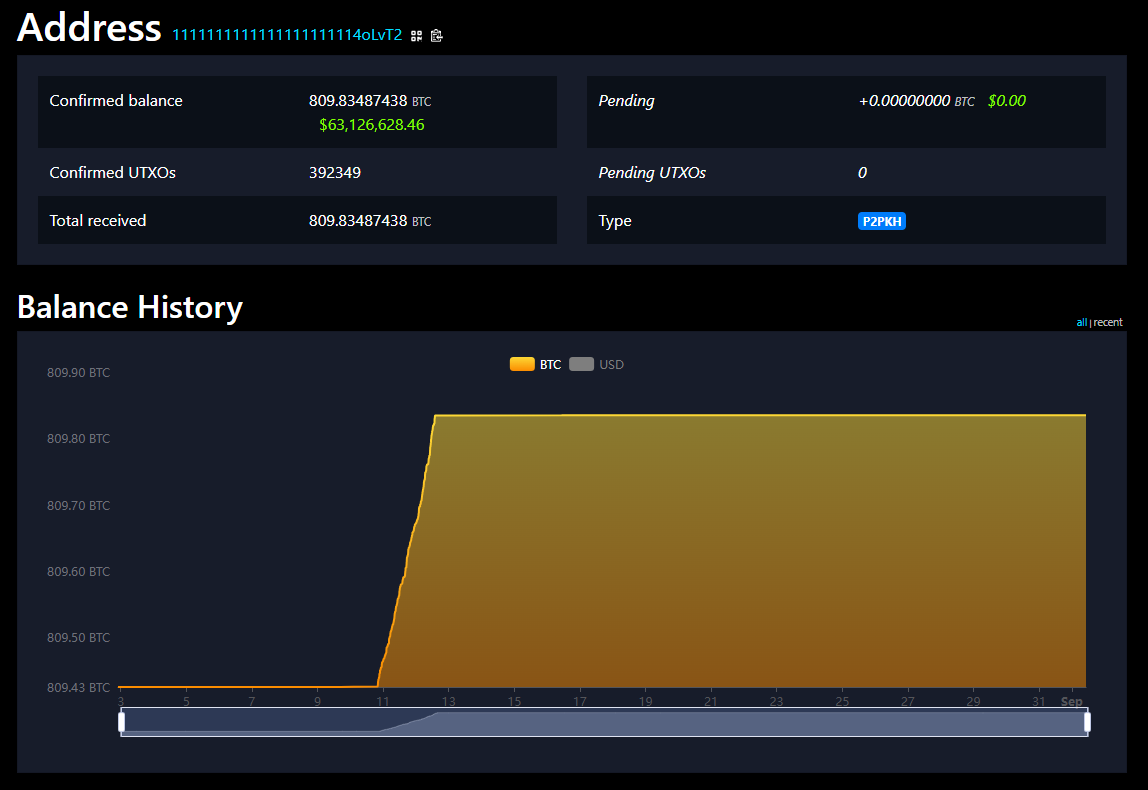
With 392,349 deposits, the average cost of each deposit has been $161 at today’s prices.
I find this deeply disturbing.